DoneDose Alternative: Why Peptide Users Choose Regimen
Last updated 2026-05-16 · iOS
Regimen vs DoneDose: Two Approaches to Injectable Tracking
DoneDose and Regimen both serve people who inject medications — but they come at the problem from different directions. DoneDose is built as a general injectable medication tracker with strong inventory management. Regimen is built specifically for peptide users who run cycling protocols and want an audit trail of every dose.
What DoneDose does well
DoneDose started with a clear insight: people who inject medications need to track where they inject, not just when. Their color-coded body map shows which injection sites are rested and ready, which are recovering, and which were used recently. This is genuinely useful for anyone rotating injection sites across multiple compounds.
Beyond site tracking, DoneDose offers a reconstitution calculator — you enter your BAC water volume and peptide quantity, and it calculates concentration per unit. This is paired with inventory tracking that automatically deducts from your vial supply as you log doses and warns you when stock is low. For users managing multiple vials with different reconstitution ratios, this is practical.
DoneDose Pro adds serum level charting for hormones and peptides, Apple Health integration, and schedule consistency insights. The export feature produces CSV and PDF files suitable for sharing with clinicians.
Their privacy model is notable: DoneDose stores everything on-device with no accounts, no cloud sync, and no data collection. For users who want their medication data to never leave their phone, this is a meaningful differentiator.
Where Regimen differs
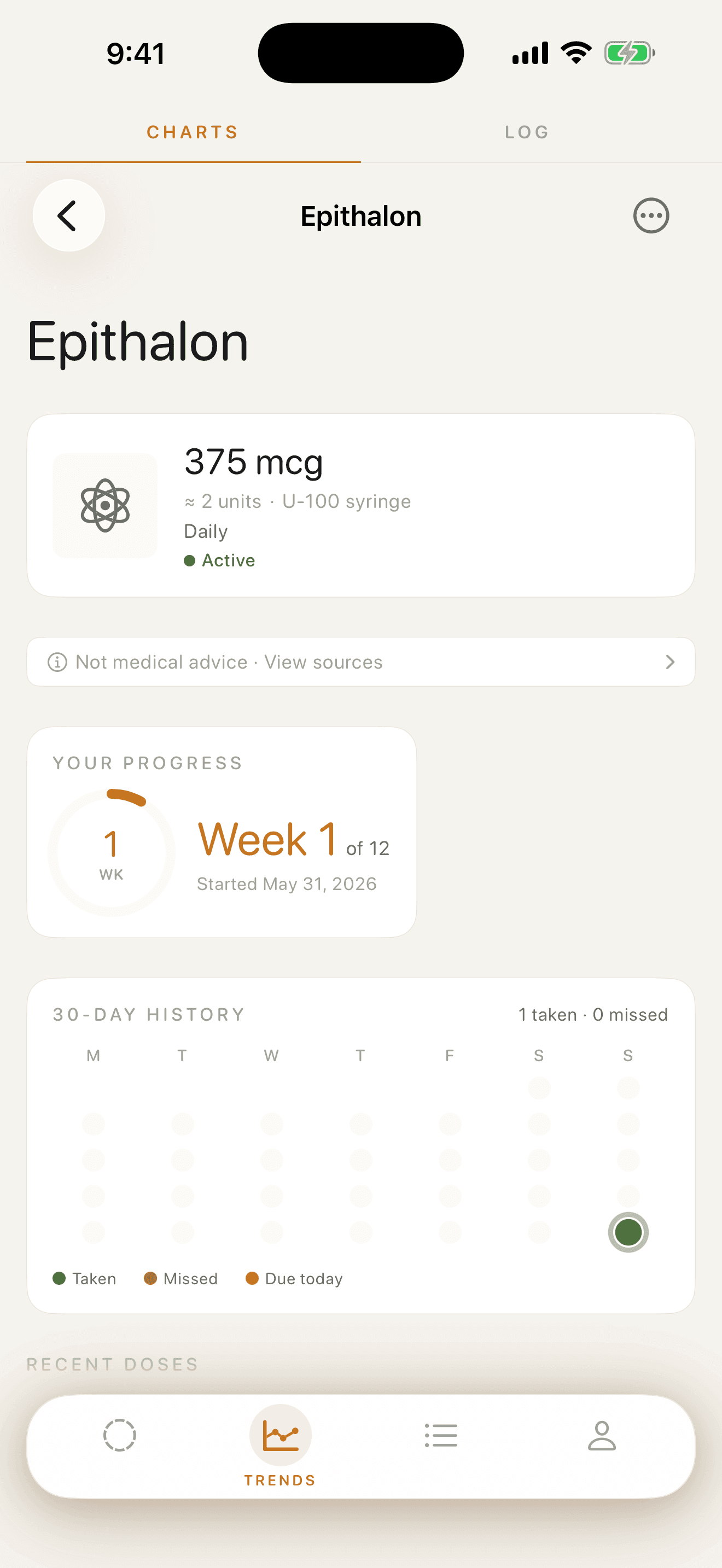
Regimen is peptide-first. The app assumes you are running a protocol — a compound at a specific dose, on a specific schedule, with cycling on and off weeks. This is the default workflow, not a configuration option.
Where DoneDose tracks what you inject and where, Regimen tracks the full protocol lifecycle: when you started, which weeks are on and off, what your provider prescribed, and every dose you have logged since day one. The dose ledger is immutable — if you log a dose by mistake, you void it rather than delete it. This creates a complete audit trail.
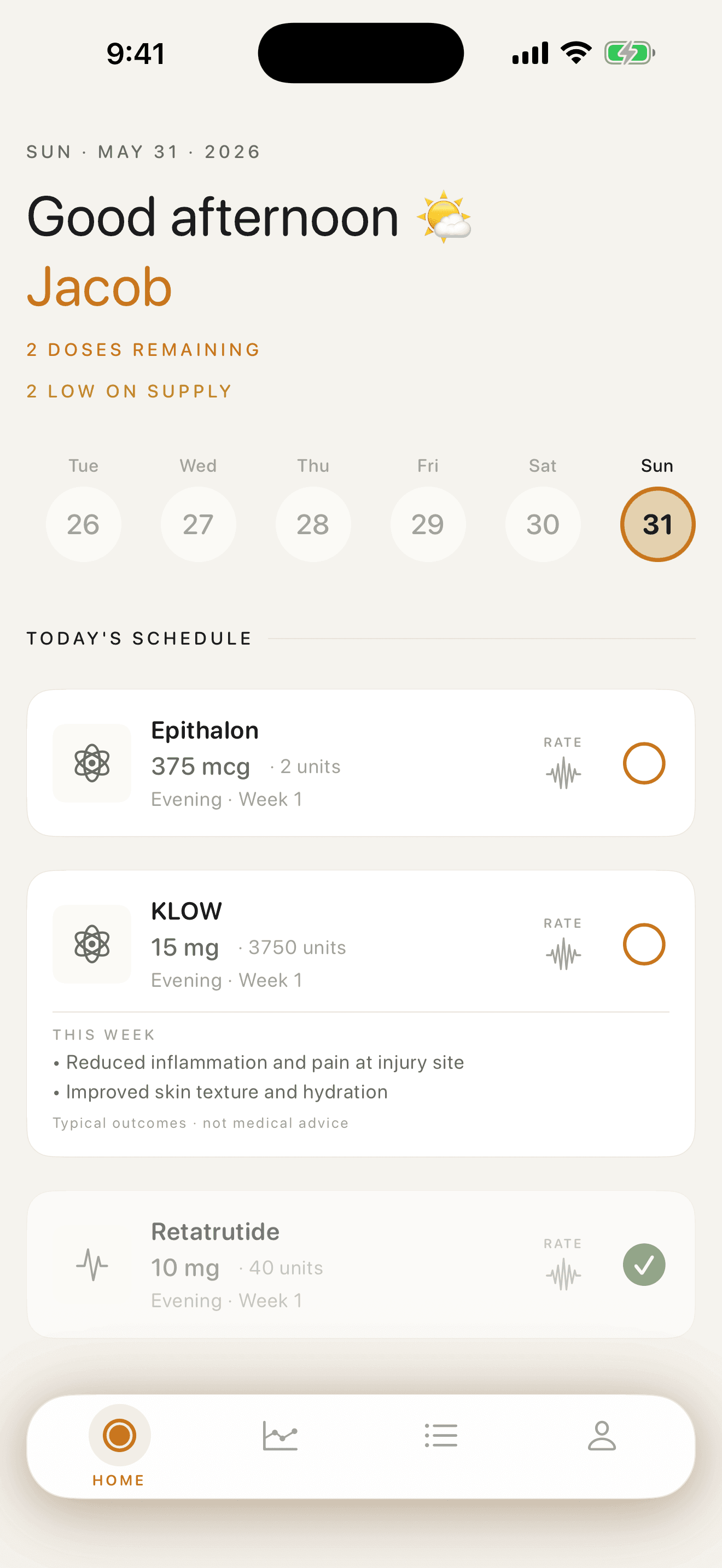
AI label scanning is Regimen's most distinctive feature. Photograph your provider's care plan or a vial label, and AI reads the compound name, dose, frequency, and cycling schedule. The extracted protocol routes through a confirmation screen before saving — you always review what the AI read.
The honest comparison
DoneDose still has one feature Regimen does not: serum level charting on its Pro tier. Vial supply, though, is no longer a one-sided gap — both apps track it now. DoneDose auto-deducts from a vial as you log doses and warns you when stock is low. Regimen projects the calendar date the vial will run out by walking your dose schedule forward and raises a Low Supply reorder alert a configurable number of days ahead. Reconstitution math is no longer a gap either — Regimen ships the Built-In Dose Planner on iOS and the web.
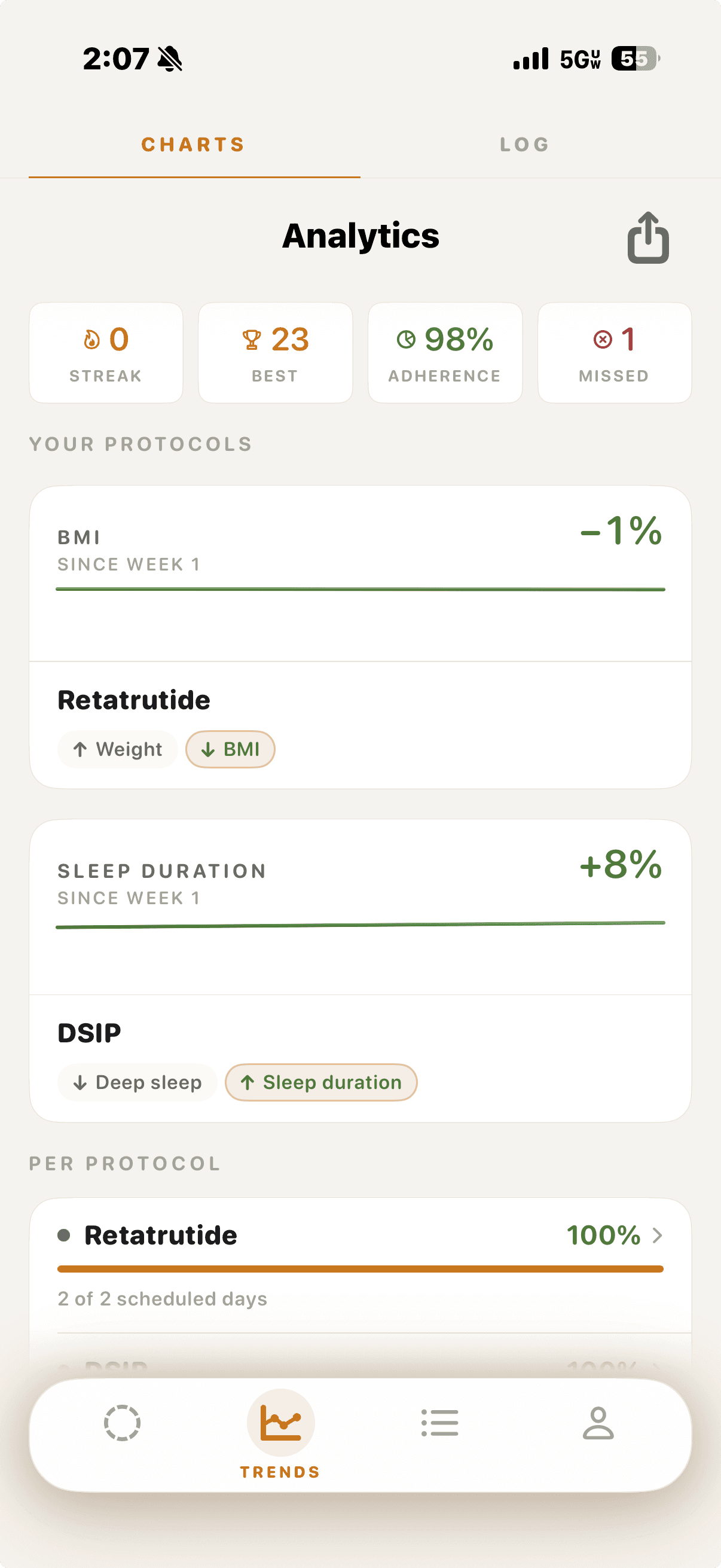
Regimen has features DoneDose does not: AI label scanning from care plans and vials, dedicated cycling schedules with on/off weeks, an immutable dose ledger designed for medical accountability, a Tracked Outcomes system that pairs subjective ratings with Apple Health biometrics on every protocol, and a Reactions Journal for side-effect logging with curated tags. Apple Health integration is also free in Regimen — DoneDose gates it behind Pro.
Both apps share data for doctors. Both track injection sites visually. Both are iOS-only today.
Which should you choose?
If you want serum level estimates and on-device-only storage with no account — DoneDose covers those. If your provider hands you a care plan, you run cycling protocols, and you want every dose in a tamper-proof ledger you can share as a PDF — Regimen is the better fit. Both now track vial supply, so that is no longer the deciding factor it once was.
DoneDose leans toward general injectable tracking with serum charting; Regimen is the protocol-first tracker with an audit-grade ledger. They overlap more than they used to — vial supply tracking included.
Feature Comparison
| Feature | DoneDose | Regimen |
|---|---|---|
| Peptide protocol tracking | ✓ | ✓ |
| Cycling tracker (on/off weeks) | ✗ | ✓ |
| Injection site rotation | Color-coded body map | Human body diagram |
| Reconstitution calculator | ✓ | iOS + web |
| Inventory / vial tracking | Auto-deduct + low-stock warning | Supply runway + reorder alerts |
| Serum level charts | Pro only | ✗ |
| Tracked Outcomes (subjective + objective) | ✗ | Rate Today + Apple Health |
| Apple Health integration | Pro only | Sleep stages, weight, HRV, RHR, glucose |
| Reactions / side-effect journal | ✗ | Curated tag library + severity |
| AI label scanning (care plan + vial) | ✗ | ✓ |
| PDF report sharing (doctor visits) | Pro only (CSV/PDF) | Includes Outcomes Since Starting |
| Immutable dose ledger with undo | ✗ | ✓ |
| Smart reminders | ✓ | ✓ |
| Multi-compound catalog | ✓ | ✓ |
| iOS | ✓ | ✓ |
| Android | ✗ | ✗ |
Based on publicly available information as of 2026-05-16.
See Regimen in action
Frequently Asked Questions
Does DoneDose support peptide cycling schedules?
Based on their public site, DoneDose does not advertise cycling or on/off week scheduling. It supports multiple medication schedules per drug but does not appear to have dedicated cycling logic for peptide protocols. Regimen has a built-in cycling tracker with automatic on/off week management.
Does Regimen have a reconstitution calculator like DoneDose?
Yes — the Built-In Dose Planner ships in the iOS app inside the protocol setup screen and on the web at /calculators/dose-planner. Vial supply tracking is no longer a gap either: Regimen tracks an open vial's remaining doses and projects when it will run out (see the vial supply question below).
How do injection site trackers compare between Regimen and DoneDose?
Both apps offer visual injection site tracking, but with different approaches. DoneDose uses a color-coded body map showing site availability status (rested, recovering, ready). Regimen uses a human body diagram that shows your injection history with timestamps. Both help you rotate sites — the visual presentation differs.
Does DoneDose have AI label scanning?
No. DoneDose does not advertise any AI-powered features. Regimen uses an AI model to read compound names, doses, frequencies, and cycling schedules from photographs of care plans and vial labels.
Which app is better for sharing data with a doctor?
DoneDose Pro offers CSV and PDF sharing for clinicians. Regimen generates a formatted PDF report of your full dose history, injection sites, and protocol details — available to all users, not just premium. Both get data to your doctor; Regimen's report is more structured for clinical review.
How does vial supply tracking compare between Regimen and DoneDose?
Both apps track how much is left in your vial, with different mechanics. DoneDose auto-deducts from the vial as you log doses and warns you when stock is low. Regimen counts the supply down as you log, projects the calendar date the vial will run out by walking your dose schedule forward, and raises a Low Supply alert a configurable number of days ahead — 7 by default — by push or email, so the prompt to reorder lands while there is still time. DoneDose also adds serum level charting on its Pro tier, which Regimen does not offer.
Is DoneDose available on Android?
Not yet — DoneDose is iOS-only, with Android listed as in development. Regimen is also iOS-only. Neither app currently supports Android.